Things to Do in Port Moresby in October
October weather, activities, events & insider tips
Low Season · Budget Friendly
October Weather in Port Moresby
Long-run averages for October
89°F (32°C)
High Temp
74°F (23°C)
Low Temp
0.6 inches (15 mm)
Rainfall
80%
Humidity
5
Rainy Days
14
Sunny-Day UV
⚠ UV index reaches 14 on clear days, classified as extreme. Unprotected skin burns in under twenty minutes at midday. Reflected UV off water and light-coloured pavement intensifies exposure even in partial shade. Full-coverage SPF 50+ sunscreen, a broad-brimmed hat, and UV-blocking sunglasses are essential every day. Not optional. Essential.
⚠ Malaria is endemic in the Port Moresby region year-round. October's warmth sustains active mosquito populations. Prophylactic antimalarial medication prescribed by a travel medicine specialist before departure is a medical necessity. Mosquito repellent with DEET should be applied from late afternoon through dawn.
⚠ October marks the transition between dry and wet seasons. Average rainfall stays very low at 15 mm (0.6 inches). Late October can occasionally deliver early wet-season thunderstorms. These arrive suddenly in the afternoon with intense lightning and downpour. They are typically brief. They can disrupt harbour boat trips and exposed hilltop activities with little warning.
Making the most of October in Port Moresby? Browse tours and activities in Port Moresby on GetYourGuide.
Is October Right for You?
Weigh the advantages and considerations before booking
Advantages
- + October lands at the tail end of Port Moresby's dry season, delivering some of the lowest rainfall of the year at just 15 mm (0.6 inches) across roughly five scattered days. The ground underfoot on bush tracks is firm and dry, harbor visibility is at its annual peak, and you can plan outdoor days with genuine confidence that the weather will hold. For a city where the wet season dumps nearly 200 mm (7.6 inches) in a single January, this is the month that rewards anyone who wants to be outside.
- + Kokoda Track conditions are at their prime. The route between Owers' Corner and Kokoda village runs through Owen Stanley Range terrain that becomes treacherous once the November rains arrive, turning clay sections into ankle-deep mud. October's dry footing, cooler morning starts around 23°C (74°F), and reliable creek crossings make this the final comfortable window before operators scale back departures for the wet season. If the Track is your reason for coming to Papua New Guinea, this is likely the month to book.
- + Port Moresby in October sits well outside any tourism increase. Guides at Varirata National Park and the Nature Park are unhurried, operators running harbor reef trips have flexibility on scheduling, and you will not compete with anyone for a sunrise view from Paga Hill.
- + The dry savanna hills ringing the city turn a pale gold by October after months without significant rain, giving Port Moresby a landscape character that surprises first-time visitors expecting wall-to-wall jungle. That golden grass against the deep blue of Fairfax Harbour and the darker greens of the remaining coastal forest patches creates a visual contrast you simply do not get during the wet months. For photographers, the late-dry-season palette is striking and distinctly Papuan.
Considerations
- − Port Moresby demands a level of situational awareness that most Southeast Asian destinations do not. Moving around the city independently on foot after dark is inadvisable, and even daytime walking requires local knowledge of which neighbourhoods are comfortable and which are not. This is not fearmongering. It is the operational reality that every experienced traveler and long-term expat in Port Moresby will confirm. Pre-arranged transport, a trusted local guide or fixer, and staying aware of your surroundings are non-negotiable here. The city rewards those who plan their movements. But it punishes those who wander casually.
- − October's UV intensity is extreme. With clear skies most days and the sun nearly directly overhead at this latitude, unprotected skin burns fast and hard. Even thirty minutes at Ela Beach or walking between Boroko's shops without shade cover will leave a mark. This is not a theoretical warning: the equatorial sun at Port Moresby's 9 degrees south hits differently than anything most visitors have experienced, and sunstroke is a real risk during midday hours if you are not disciplined about hydration, hats, and shade breaks.
- − Tourism infrastructure in Port Moresby remains limited compared to what most travelers are accustomed to in the Asia-Pacific region. Dining options outside of accommodation-based restaurants are thin, public transport via PMVs requires local knowledge to navigate safely, and the range of bookable day activities within the city itself is narrow. This is a destination where advance planning, arranged transfers, and realistic expectations about service levels matter enormously. Spontaneous wandering and last-minute bookings are not how Port Moresby works well.
Settled on October? Compare hotel prices in Port Moresby for your dates on Trip.com.
Best Activities in October
Top things to do during your visit
Kokoda Track Multi-Day Guided Trek
The Kokoda Track is the reason most adventure travelers fly into Port Moresby, and October is arguably the single best month to walk it. The 96 km (60 mile) route crosses the Owen Stanley Range through dense montane forest, river valleys, and ridge crests that saw some of the most brutal fighting of the Pacific War in 1942. In October, creek levels are low enough to ford safely, the clay sections that turn into skating rinks during the wet are dry and grippy, and morning temperatures in the higher elevations around Brigade Hill and Isurava sit comfortably around 18-20°C (64-68°F) before the day warms up. You will hear the forest before you see much of it: the constant layered hum of insects, the crack of falling branches in the canopy 30 metres (100 ft) above, the call of Papuan hornbills echoing across valleys so steep that the village on the opposite ridge looks close enough to shout to but takes three hours to reach. The trek typically runs eight to eleven days depending on pace and operator, and it is physically demanding in the honest sense: multiple days of steep ascent and descent through terrain that does not flatten out. October's dry conditions do not make it easy. But they make it as manageable as this route gets.
Booking Tip: Book at least two to three months ahead for October departures, as this is the final prime-condition window before the wet season and experienced operators fill their groups early. Look for operators led by Australian or Papua New Guinean guides with verifiable trek histories, and confirm that the price includes porter support, village accommodation, and medical evacuation insurance. See current guided trek options in the booking section below.
Varirata National Park Rainforest Day Hike and Birding
Varirata sits about 42 km (26 miles) east of Port Moresby along the Sogeri Road, climbing from the coastal savanna into proper montane rainforest at around 800 m (2,625 ft) elevation. October's dry conditions mean the park's trail network is firm underfoot rather than the slick mud-baths they become from December onward, and the slightly lower humidity at altitude makes a full morning of walking pleasant rather than punishing. The star attraction is the Raggiana Bird-of-Paradise, the species on Papua New Guinea's flag, and October falls within their display season: males gather at traditional display trees in the early morning, fanning their flame-orange plumes and calling with a sound somewhere between a crow and a rusty gate hinge. You will hear them well before you spot them. A good guide knows exactly which trees to wait beneath. The canopy drips with orchids, the air smells of damp earth and decomposing leaf litter even in the dry months, and the lookout point at the old wartime radar station has a view back across the savanna to Port Moresby's harbour that justifies the drive on its own. Give yourself a full morning: arrive by 6 AM for the bird activity, walk the main loop trail, and be back in the city by early afternoon before the heat peaks.
Booking Tip: Arrange a guided day trip through licensed operators who provide transport from Port Moresby, as driving yourself requires a vehicle suited to the road conditions and familiarity with the route. A knowledgeable birding guide transforms this from a pleasant walk into something revelatory. Book a week or more ahead to secure a guide with real ornithological knowledge. Check the booking section below for current day-trip options.
Port Moresby Historical and Cultural City Tour
Port Moresby's history is layered in a way that most visitors do not expect until they are standing in front of it. A guided circuit of the city typically covers Parliament Haus, whose facade incorporates a soaring Sepik-style haus tambaran spirit house design rendered in modern concrete and mosaic, the National Museum and Art Gallery where Highlands warrior shields and Trobriand Island carvings sit in cool, dim galleries that smell faintly of the wood preservative keeping centuries-old artefacts intact, and Bomana War Cemetery where 3,824 Commonwealth graves lie in immaculate rows on a hillside above the city. October's dry weather and manageable morning temperatures around 26-28°C (79-82°F) make the outdoor portions of this circuit comfortable rather than punishing. The cemetery in particular is worth an unhurried visit in the early morning light, when the stone markers cast long shadows across the grass and the quiet is so complete you can hear the groundskeepers' shears from the far end of the grounds. Paga Hill has a panoramic view across Fairfax Harbour to the Coral Sea, and on a clear October day the visibility stretches to the reef line. The city does not give up its character from inside an air-conditioned vehicle. You need to stop, stand in these places, and let the heat and the silence do the work.
Booking Tip: Guided city tours with a knowledgeable local guide who can provide both historical context and navigate the city safely are the right approach here. Book several days ahead and confirm that the tour includes vehicle transport between sites. See current city tour options in the booking section below.
Bootless Bay and Harbour Reef Diving and Snorkeling
The waters south of Port Moresby around Bootless Bay and the fringing reefs of the harbour islands offer diving and snorkeling that surprises people who came here expecting only the Kokoda Track. October's calm seas, minimal current, and water temperatures around 27°C (81°F) create conditions where visibility regularly pushes past 20 metres (65 ft), and the reef systems here have benefited from relatively low diver traffic compared to more famous Pacific sites. The coral is healthy in a way that feels almost confrontational if you have been diving degraded reefs elsewhere: hard coral formations in pinks, purples, and electric blues, with the kind of fish density where clownfish, surgeonfish, and reef sharks occupy the same visual frame. Loloata Island, a short boat ride from the mainland, sits above a reef wall that drops away into deeper water where pelagics patrol, and the WWII wreck sites scattered around the harbour add a historical dimension to the diving that is uniquely Papuan. The sensation of dropping into blood-warm water off a small boat while the golden hills of Port Moresby shimmer in the October heat behind you is a specific and unreplicable experience. Non-divers can snorkel the shallower reef flats with good results in these calm conditions.
Booking Tip: Book reef trips at least a week ahead and confirm that the operator provides all equipment, certified dive masters, and boat safety gear including radio communication. October's calm conditions mean cancellations are rare. But operators run to smaller group sizes here than in high-volume dive destinations. Check the booking section below for current dive and snorkel trip availability.
Port Moresby Nature Park Wildlife Encounter
The Nature Park sits within city limits as both botanical garden and wildlife sanctuary. It houses species most visitors to Papua New Guinea never encounter in the wild despite weeks of trekking. October's dry weather means tree kangaroos, cassowaries, and multiple species of birds-of-paradise stay active and visible rather than sheltering from rain. The walking paths through the forest canopy remain dry and comfortable. The sound environment alone justifies the visit. The deep, resonant boom of a cassowary call carries through trees with a bass note you feel in your chest before your ears register it. Birds-of-paradise produce percussive clicking during displays that sounds mechanical rather than biological. The orchid collection blooms unevenly through the year. But October typically catches the tail end of several species' flowering cycles. The park is small enough to cover thoroughly in two to three hours. This makes it an ideal morning activity before midday heat peaks. The smell of frangipani along the entrance path and the warm, loamy scent of the forest floor give the place character. It feels more like stepping into someone's carefully tended private garden than visiting a municipal attraction.
Booking Tip: The Nature Park can be visited independently or as part of a broader city tour. Arrive early in the morning when animal activity peaks and temperatures remain comfortable. Confirm current opening hours before visiting, as schedules can shift. See the booking section below for tour packages that include the Nature Park.
Where to Stay in Port Moresby in October
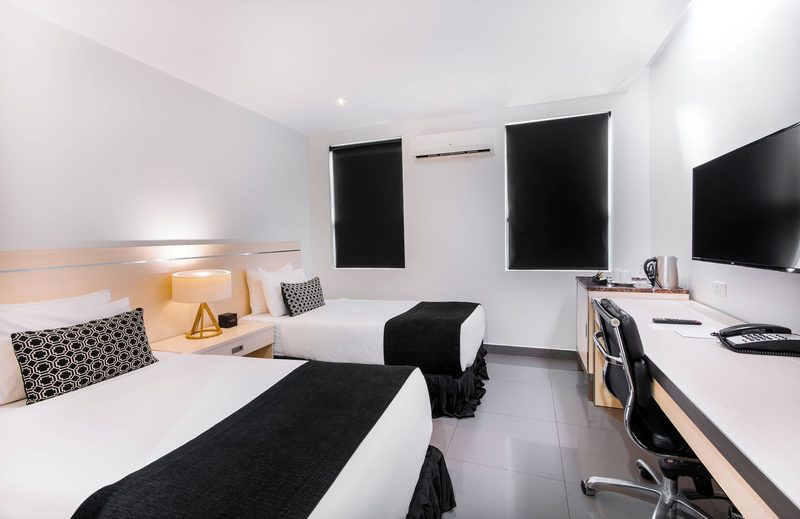
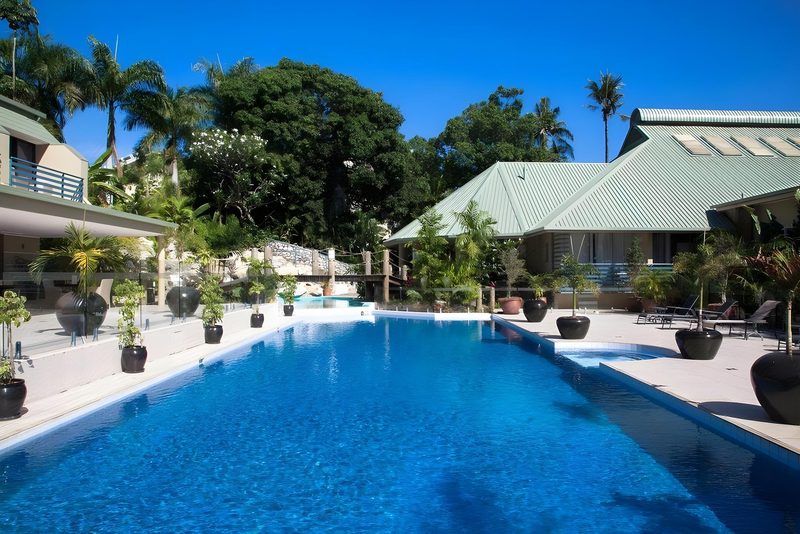
Hand-picked hotels across price tiers for October travellers.

Packing Checklist
Bookmark this page — your progress is saved between visits
Need the full list with shopping links?
Climate-specific gear, brand recommendations, and what to leave at home.
View Port Moresby Packing List →Essential Tips
Insider knowledge and common pitfalls to avoid
Insider Knowledge
The red stains on every pavement, wall, and bin in Port Moresby are buai, betel nut, and the spitting is universal and constant. First-time visitors sometimes mistake it for something alarming. It is not. Buai is the social currency of Papua New Guinea: offered as greeting, shared during conversation, sold at every roadside by women sitting behind neat pyramids of green nuts and mustard-stick bundles wrapped in betel leaf. You will be offered some. The taste is bitter and astringent. The mild stimulant effect is real. The red saliva it produces means you either commit to spitting for the next hour or politely decline. Locals respect either choice. But accepting at least once opens a conversational door that nothing else quite matches.
Tok Pisin, not English, is how Port Moresby communicates at street level. Most people understand English. But greeting someone with 'Apinun' (good afternoon) or 'Tenk yu tru' (thank you very much) shifts the interaction from transactional to personal in a way that is immediately visible. The language is surprisingly intuitive for English speakers once you hear the rhythm. 'Mi laik go long maket' (I want to go to the market) is not far from what it sounds like. Even a dozen phrases change the texture of your entire visit.
Koki Market rises on stilts above the waterfront. Go at dawn. The fishing boats unload then, and reef fish still glisten and twitch on the tables. By mid-morning the heat settles in. The smell shifts from fresh salt and wet wood to something far less pleasant. Arrive early with a guide who knows the vendors. You will see coral trout, Spanish mackerel, and mud crabs piled in quantities and varieties that reveal how central the sea remains to this city's daily life. Women at the entrance sell bilum bags. Each takes weeks to weave by hand. These rank among the most authentic and portable souvenirs you can carry home from Papua New Guinea.
Arrange every transfer in advance through your accommodation or a trusted local contact. Port Moresby does not work like cities where you step outside and hail a taxi. PMVs, the minibuses that serve as public transport, follow informal routes and demand local knowledge to use safely. Pre-arranged vehicles with known drivers are how expats, diplomats, and experienced travelers move around the city. October's low tourist numbers mean availability is usually good with a day's notice. Do not resent this. It is simply how the city operates. Work with it, not against it.
Avoid These Mistakes
Walking the city alone without a local guide or pre-arranged transport plan. Port Moresby does not reward spontaneous pedestrian exploration the way Bangkok or Lisbon might. Some areas feel comfortable in daylight with awareness. Others do not. The boundaries between them are not obvious to newcomers. Travelers who thrive here accept this reality before arrival. They build itineraries around guided movement and arranged transport. Those who have bad experiences almost always assumed they could navigate on instinct alone.
Do not underestimate the equatorial sun because the temperature reads 'only' 32°C (89°F). At 9 degrees south of the equator, October's sun sits nearly directly overhead. The UV index of 14 is classified as extreme by every international health standard. Thirty minutes of unprotected midday exposure produces burns that blister. Travelers accustomed to Mediterranean or even tropical beach sun at higher latitudes consistently underestimate how fast and how severely equatorial UV damages unprotected skin. Schedule outdoor activities for morning and late afternoon. Treat the noon-to-3 PM window as indoor time.
Port Moresby does not represent all of Papua New Guinea. The city is an administrative and commercial centre with a character completely unlike the Highlands villages, Sepik river communities, or island provinces. Travelers who spend their entire trip here and conclude they have 'seen PNG' have made the equivalent of visiting Canberra and claiming they understand Australia. The city works as a necessary staging point, for the Kokoda Track, and it holds genuine points of interest. But the depth of Papua New Guinea as a destination lies overwhelmingly beyond it.
Short on time? See day trips around Port Moresby on GetYourGuide.
Ready to plan your trip to Port Moresby?
Now that you've got the research covered, here's where to go next.
Book Experiences in Port Moresby
Top-rated things to do in Port Moresby this October


Explore More Activities in Port Moresby
Didn't see anything interesting yet?
Browse Viator's full catalog of tours, day trips, food experiences, and private guides in Port Moresby.
See All Port Moresby Tours on Viator